
Invasive Species in the Allegheny Reservoir
As of 2018, there are five aquatic invasive species in the Allegheny Reservoir. These invasive species are ...
- Spiny Water Flea - Bythotrephes longimanus
- Eurasian Watermilfoil - Myriophyllum spicatum
- Common Carp - Cyprinus carpio
- Rudd - Scardinius erythrophthalmus
- Allegheny Crayfish - Orconectes obscurus
"Hitchhiker Invasive Species"
Both the Spiny Water Flea and Eurasian Watermilfoil were both most likely introduced to the Allegheny Reservoir through watercrafts, trailers, and equipment that was not properly cleaned prior to entering the Reservoir. They are both "Hitchhiker invasive species," which are spread to new ecosystems by catching a ride, or "hitchhiking" on human gear.
Spiny Water Flea
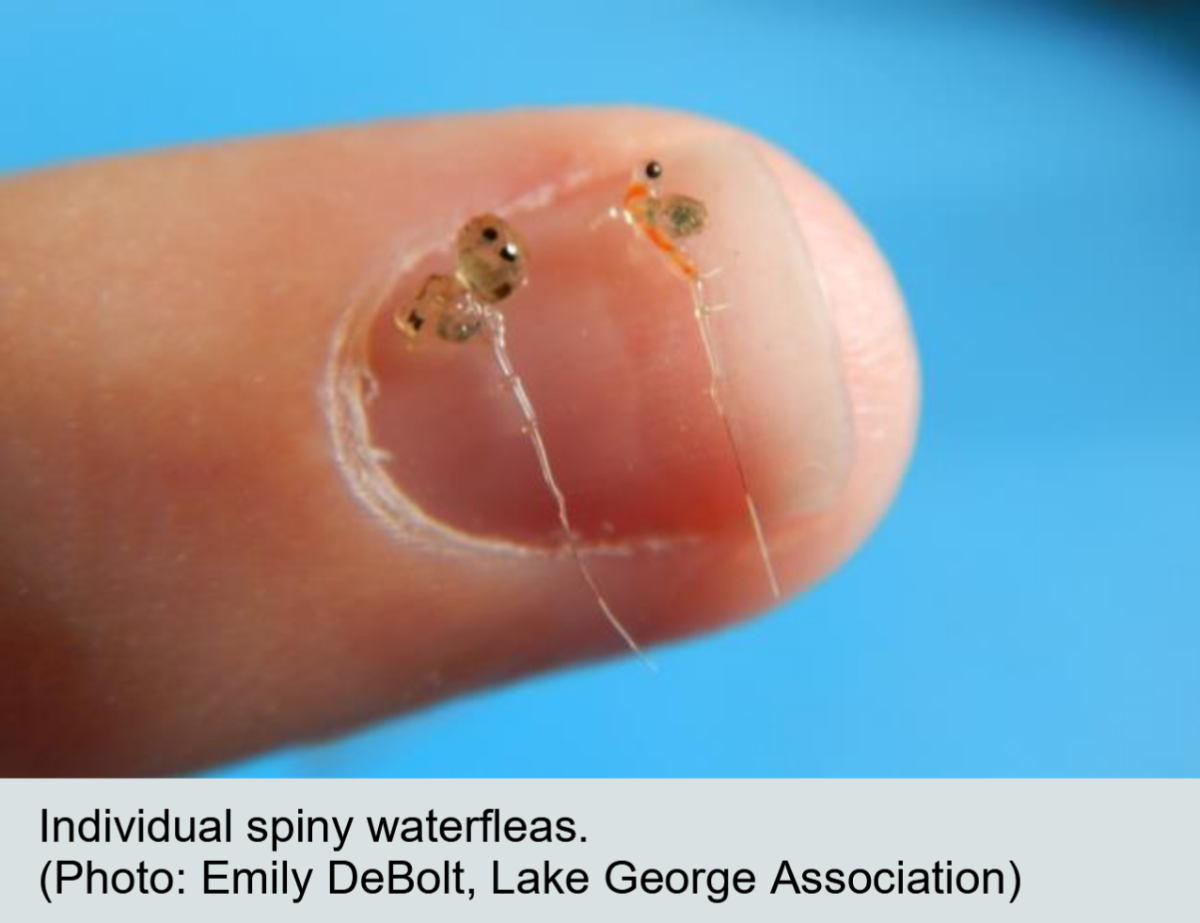
What is a Spiny Water Flea?
Spiny Water Fleas are aquatic zooplankton that are native to Europe and Asia. Adults range from ¼ to 5/8 inch long, with a single long tail with sets of small spines along its length.
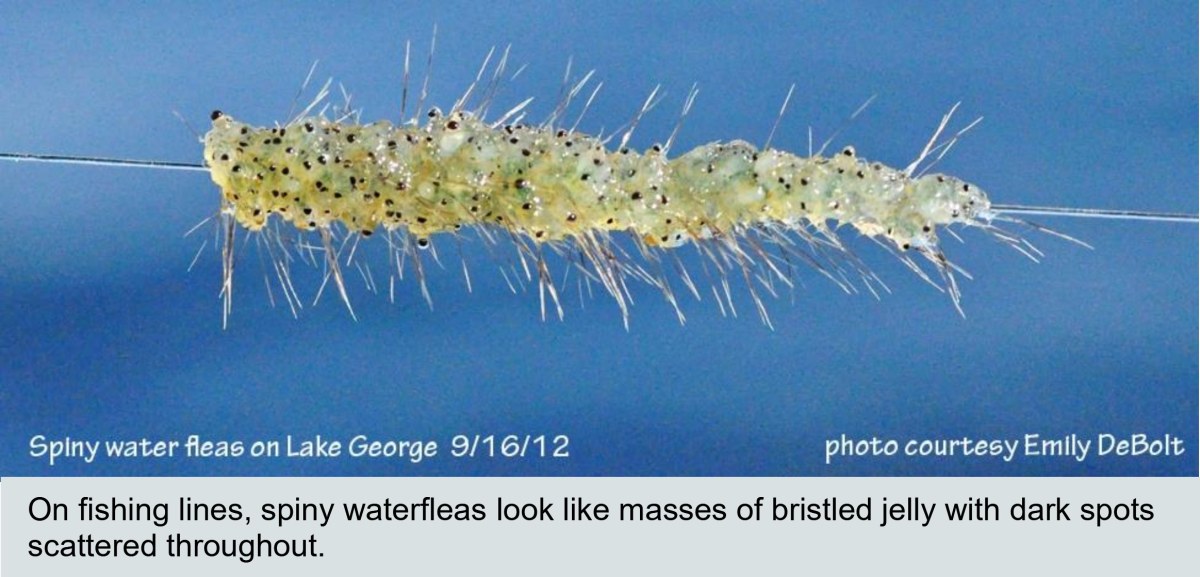
Negative Impacts
Spiny Water Fleas eat smaller, native zooplankton that are an important food source for crustaceans and fish, such as Perch and American Paddlefish.
Control Methods
As of right now, there is no known control method for the Spiny Water Flea, so preventing the spread to other waterbodies is critical.
Eurasian Watermilfoil
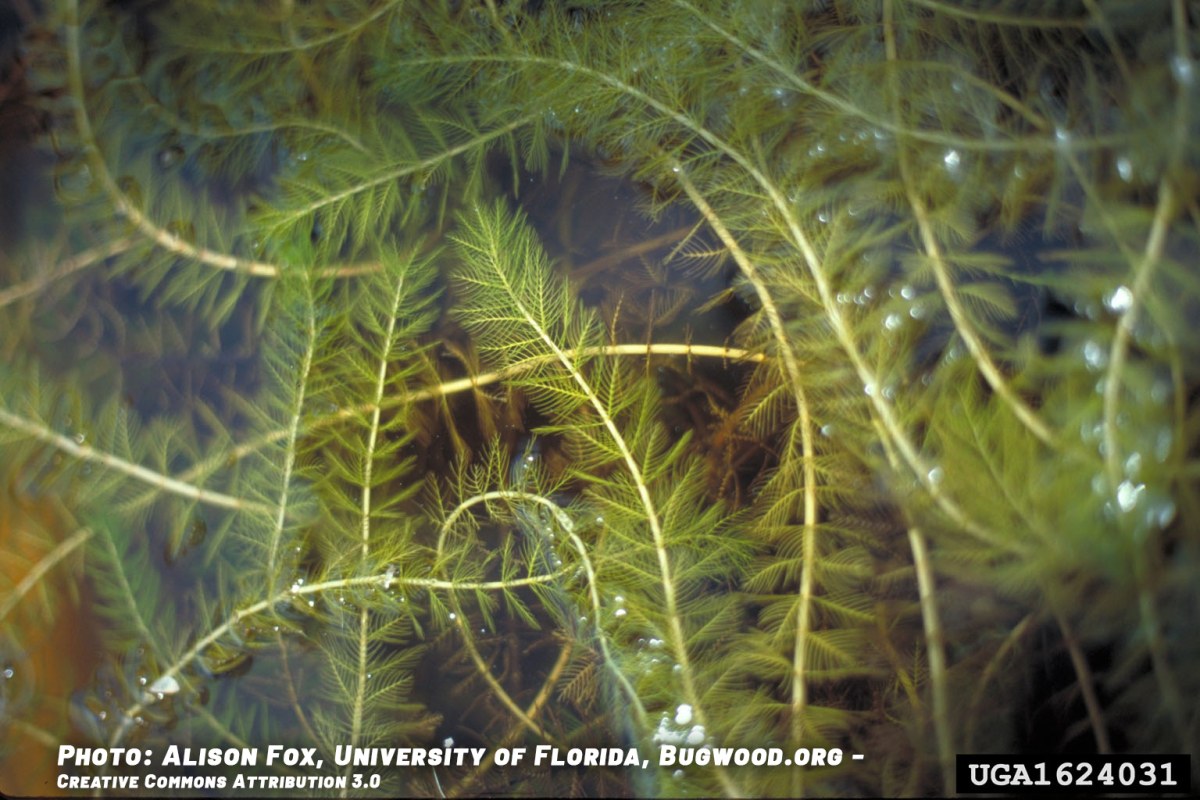
What is Eurasian Watermilfoil?
Eurasian Watermilfoil is a submerged perennial that looks very similar to Native Northern Watermilfoil. It is bright green, with feather-like leaves arranged in groups of four around the stem. Eurasian Watermilfoil is native to Europe, Asia and northern Africa.
Negative Impacts
Eurasian Watermilfoil often grows in large, thick mats that form dense canopies at the surface, reducing light penetration and shading out native vegetation.
Control Methods
Eurasian Watermilfoil are controlled through a variety of methods, such as physically hand pulling, raking or harvesting, using herbicides, or through biological controls, such as the Milfoil Weevil.
Comparing Water-milfoils
Similarities
Eurasion and Native Northern Watermilfoil have leaves arranged in whorls of 4 around the stem and each leaf is finely divided into paired leaflets.
Differences
Eurasion Watermilfoil has 12 to 21 pairs per leaflet and is limp out of water WHILE Native Northern Watermilfoil typically has less than 12 pairs per leaflet and keeps its shape out of water.
How Were Spiny Water Fleas and Eurasian Watermilfoil Introduced?
Both Spiny Water Fleas (First introduced to the Great Lakes) and Eurasian Watermilfoil (First introduced to the Chesapeake Bay area) were most likely brought to North America through the ballast water of ships. They have both now spread to several waterbodies outside of where they were originally introduced through watercrafts, trailers and equipment that were not properly cleaned before entering a newbody of water. Spiny Water Fleas are commonly spread to waterbodies by attaching to fishing lines, downriggers, anchor ropes and fishing nets. Spiny Water Fleas are now found in several inland lakes in the northeastern United States and Canada, while Eurasian Watermilfoil is now found in almost every state in the United States, as well as throughout much of Canada.
How Can I Help?
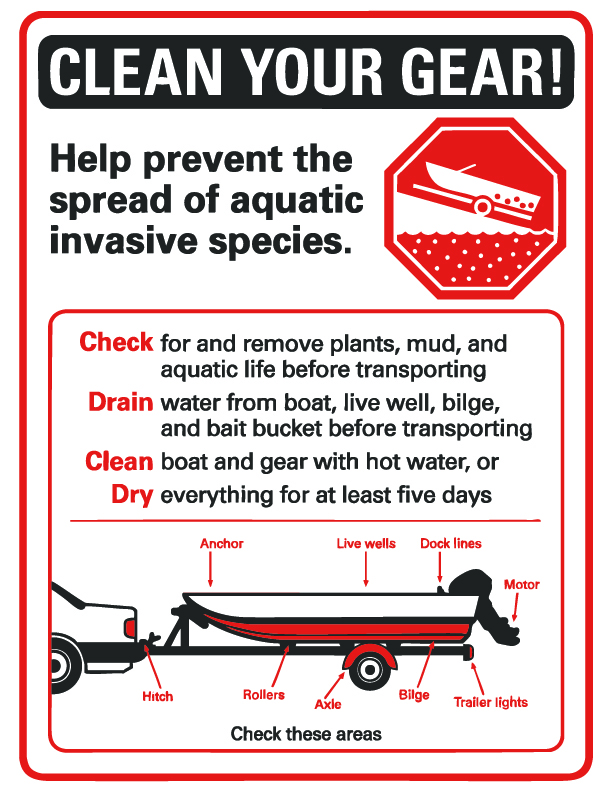
Clean, drain and dry your watercraft, trailer and equipment before and after each use
When possible, use the following methods to fully decontaminate your equipment
- Clean the outside of the watercraft and trailer with high pressure and hot water (140°F) for 10 seconds
- Soak fishing gear and equipment in hot water (140 °F) for two minutes
- Dump bait bucket water on land
- Flush the inside of the motor and all compartments with hot water (140 °F) for two minutes
Clean Your Gear Poster
Fish Invasive Species
Both the Common Carp and the Rudd are non-native, invasive fish species to the Allegheny Reservoir.
Common Carp
The Common Carp is native to Europe and Asia, and although they are not native to New York state, they are now the largest species of minnow in the state, with the state record weighing over 50 lbs. The Common Carp is an important game fish, as well as an important food source in Asia and Europe.
Introduction to the United States
Common Carp were introduced to the United States through stocking efforts in the 19th Century. Due to their popularilty in Europe and Asia, Common Carp were stocked by the U.S. Fish Commission as a food source for people, and as a sport fishing opportunity. The introduction of Common Carp to the United States was successful, as they are now widespread throughout the country. However, both public agencies and the general public have come to regard the fish as a nuisance.
Negative Impacts
Common Carp consume large amounts of aquatic vegetation on the shore, which can disrupt habitat that is essential for native juvenile fish to survive into adulthood. The large consumption of aquatic vegetation on the shore can also disrupt waterfowl and amphibian habitat. This can also lead to waterbodies having an increase in turbidity, negatively impacting water quality. The lack of aquatic vegetation caused by Common Carp may also lead to an increase in Harmful Algal Blooms due to a lack of plants to absorb excess nutrients.
Rudd
The Rudd is a minnow species that is native to Europe and Asia. Rudd are easily identifiable by their yellowish-gold scales and striking crimson-red fins. They can grow to 16 inches in length.
Introduction to the United States
Rudd were most likely accidentally introduced to North America through bait bucket releases by fishermen. The Rudd was first observed in the United States in the 1880s. To help mitigate the spread of Rudd to more bodies of water, please follow New York State's baitfish regulations.
Negative Impacts
The Rudd competes, and often times outcompetes native fish for habitat and food. Rudd will also sometimes hybridize with native Golden Shiners, which threatens genetic diversity and purity of native golden shiner populations. Rudd also consume large amounts of aquatic vegetation on the shore, which can disrupt habitat that is essential for native, juvenile fish to survive into adulthood. The large consumption of aquatic vegetation on the shore can also disrupt waterfowl and amphibian habitat.
Learn more about invasive species
Click Here for more information about invasive species in Cattaraugus County and New York State
To view the "Invasive Species" kiosk panel that is currently located at Onoville Marina Park, Click Here